
How to Use ELISA Kits to Support Undergraduate Teaching, Learning, and You
Do you remember the first time you performed an ELISA?
As a professor, you might be able to do this assay in your sleep and analyze the data before you wake up, but most won’t even know where to begin. It makes sense that you want to help your students find this starting point faster and easier than just in their dreams.
ELISA Kits Support Research
Safe, dependable, and with no highly specialized equipment requirements, ELISAs have a myriad of uses from cutting edge biomedical research to critical conservation efforts. Rapid results and accessible materials make these tests ideal for both laboratory and field work.
For conservation researchers like Dr. Logan Pallin at University of California, Santa Cruz, it would sometimes take years for data to be properly analyzed and shared. ELISAs provide accurate real-time data about the marine megafauna he studies, allowing for real-time results and solutions.
ELISA Kits Support Education
Whether you are a professor with years of experience or a first-year student who has never touched a pipette, ELISAs are an important part of quantitative research. As described by Dr. Pallin, “Understanding the whole process on a biochemical level is really important.” That’s why he works with ISWE (International Society of Wildlife Endocrinology) and multiple different countries to teach researchers proper ELISA techniques.
With easy to follow protocols and standardized reagents, ELISA kits make sharing knowledge a breeze, no matter your background. Arbor Assays kits are “bulletproof” at every stage, making them ideal for teaching labs.
Introducing Students to the Wet Lab
To a student who has never done wet lab work, even simple lab protocols can be overwhelming. To introduce basic skills like micropipetting and mixing, Dr. Pallin recommends water and food coloring in place of samples and reagents. Each step of the practice protocol should emphasize key techniques, such as the examples listed below.
- Reagent mixing via micropipetting water and food coloring in primary colors
- 96-well plate preparation via micropipetting color-tinted water
- Homogenization via small volumes of food coloring (>5 uL) mixed with large volumes of water using micropipettes
Before they can measure unknown samples, students need to understand the fundamental steps of an ELISA. For example, Dr. Pallin suggests that students should consistently be able to produce standard curves necessary for data analysis prior to working with test samples. Practicing this skill will also teach students how tiny errors can propagate into largely problematic data.
How to Find the Right ELISA Kit
When you and your students are ready for the teaching lab, ELISA kits are an ideal learning tool. A quality kit should come with everything needed to smoothly perform the assay from start to finish.
- Straightforward protocol keeps students on track
- Short incubation periods prevent distractions
- Fast results make kits easy to use in class
- Standard plate reader compatible, no need to invest in overly specialized technology
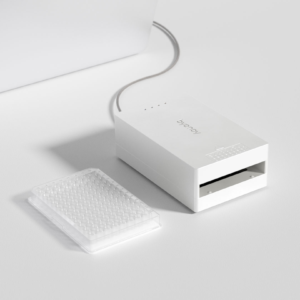
- Also fieldwork compatible with the Absorbance 96 compact plate reader
Troubleshooting
If you are having trouble, we recommend the following based on our own experiences and essential advice from Dr. Pallin.
- Read (and re-read) the manual
- Watch how-to videos or similar mini-lectures
- Develop customized SOP for in-house use
- Create a laminated checklist of steps for students to follow
- Watch the student directly or have them wear a GoPro or similar camera while performing the ELISA to find problem points
Still stuck? Never hesitate to reach out to customer support. A company dedicated to education will be happy to help you troubleshoot and investigate.
Class Is in Session
If you are ready for reliable, simple, and affordable ELISA teaching materials, check out Arbor Assays kits for academic research and higher education.
_______________________
By: Eileen Johnson
Editors: Courtney Myers, Charukesi Sivakumar