
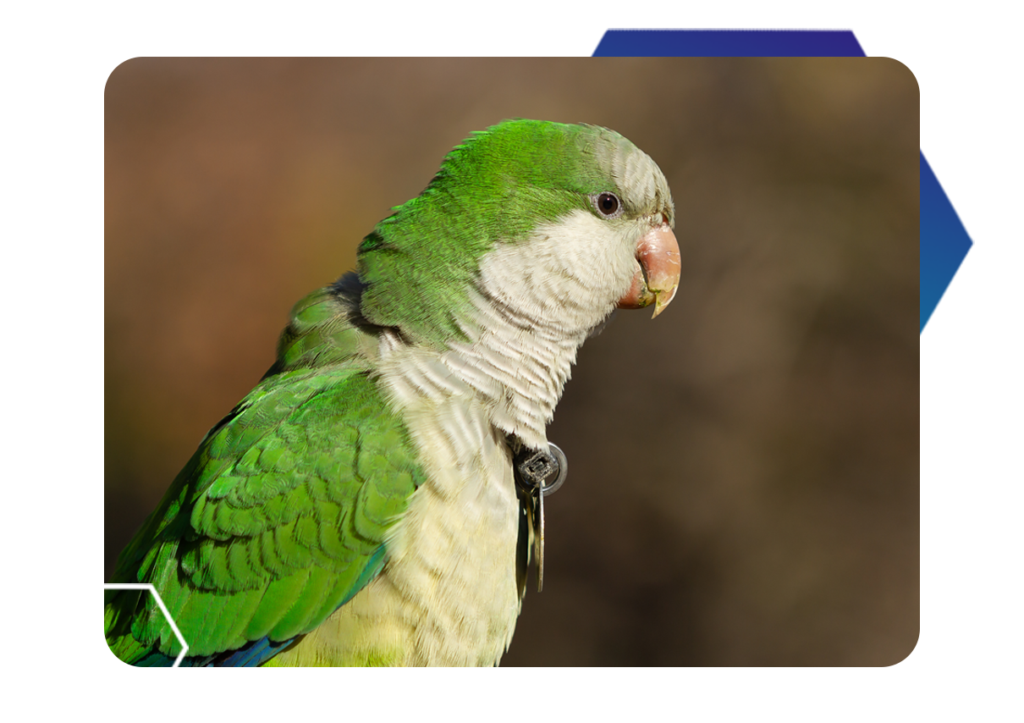
What Chronic Stress Can Teach Us About Talking Parrots
Most people know budgerigars as colorful pet birds, but they’re also one of the few animals that can continue learning new vocalizations throughout adulthood. That ability makes them a useful model for studying how the brain adapts to stress and how those changes might affect communication.
A recent study explored what happens when these parrots experience repeated, unpredictable environmental disturbances. Instead of focusing only on stress hormone levels, the researchers looked at what was happening inside the birds’ brains.
Why Study Budgerigars?
Budgerigars don’t stop learning once they reach adulthood. They regularly adjust their contact calls to match the birds around them, making them an excellent species for studying vocal learning and brain plasticity.
To see how chronic stress influences that process, researchers exposed adult male budgerigars to several weeks of mild but unpredictable disturbances. Along the way, they measured circulating corticosterone, the primary stress hormone in birds, and examined glucocorticoid receptor (GR) and mineralocorticoid receptor (MR) expression in brain regions involved in vocal learning.
A Different Kind of Stress Response
One result stood out.
The birds exposed to repeated disturbances did not show significant changes in circulating corticosterone compared with the control group. Instead, the biggest difference appeared in the brain itself.
The researchers found lower GR expression in the magnocellular nucleus of the medial striatum (MMSt), a region that helps maintain learned vocalizations. MR expression, on the other hand, remained relatively unchanged.
That suggests chronic stress may alter how brain cells respond to stress hormones, even when hormone concentrations in the bloodstream remain stable.
Looking Beyond Hormone Levels
Stress research often focuses on circulating hormone concentrations, but this study points to another piece of the puzzle. Changes in receptor expression may have a meaningful impact on behavior, even when hormone levels don’t appear to change.
For animals that rely on vocal learning to communicate with members of their flock, those neural changes could influence how they adapt to their social environment.
Why It Matters
Budgerigars share several features of vocal learning with other species, including humans, making them a valuable model for understanding the relationship between chronic stress, brain function, and communication.
The findings also serve as a reminder that hormone measurements tell only part of the story. Examining receptor expression alongside circulating hormones can provide a more complete picture of how stress affects biological systems.
Read the Full Study
This work offers an interesting look at how repeated environmental disturbances reshape stress signaling within the brain and what that could mean for vocal learning.
If you’d like to explore the research in more detail, read the full study: Time the Avenger: Unpredictable Environmental Disruptions Induce Changes in Neural Expression of Glucocorticoid Receptors in the Vocal Learning Circuit of the Male Budgerigar
Featured Products
-
 In Stock
Corticosterone Multi-Format ELISA Kit
Price range: $375.00 through $1,499.00The DetectX® Corticosterone Multi-Format ELISA Kits quantitatively measures corticosterone present in a variety of samples.