
Blood Urea Nitrogen Quantifies Kidney Function and Disease
Pre-clinical models are essential for understanding kidney function and disease progression in humans. From acute kidney injury (AKI) to chronic kidney disease (CKD), researchers rely on biomarkers that are both biologically meaningful and practical to measure. Blood urea nitrogen (BUN) is one such foundational indicator of renal function in translational rodent models.
BUN quantifies the kidney’s ability to clear nitrogenous waste from the circulation, providing a direct measure of glomerular filtration capacity. BUN measurements are particularly informative when interpreted alongside histological, molecular, and functional endpoints. Below, we highlight recent publications that demonstrate how BUN, when measured consistently and sensitively, provides mechanistic insight across diverse models of kidney disease.
Linking Mechanism to Function in Emerging Kidney Research
Rodent studies widely use blood urea nitrogen (BUN) to quantify kidney dysfunction across experimental paradigms. These include obstruction-induced injury, diet-induced chronic kidney disease, and systemic disease models that exacerbate renal pathology. Because BUN rises early and scales with injury severity, it provides a reliable functional bridge between molecular signaling changes and whole-organ dysfunction.
This relationship is clearly illustrated in a recent study in the Journal of Cachexia, Sarcopenia and Muscle that examined muscle–kidney crosstalk. Using both unilateral ureteral obstruction (UUO) and adenine-induced CKD models, the authors showed that skeletal muscle damage actively worsens kidney injury. Plasma BUN levels increased in parallel with inflammatory and fibrotic markers, indicating renal functional decline.
Notably, the same study identified a mechanistic driver of this effect: small extracellular vesicles (sEVs) released from damaged skeletal muscle. Muscle-derived sEVs accelerated kidney injury progression, with rising BUN levels reflecting worsening renal function. When vesicle biogenesis was pharmacologically inhibited, BUN levels decreased, along with reductions in inflammation and fibrosis.
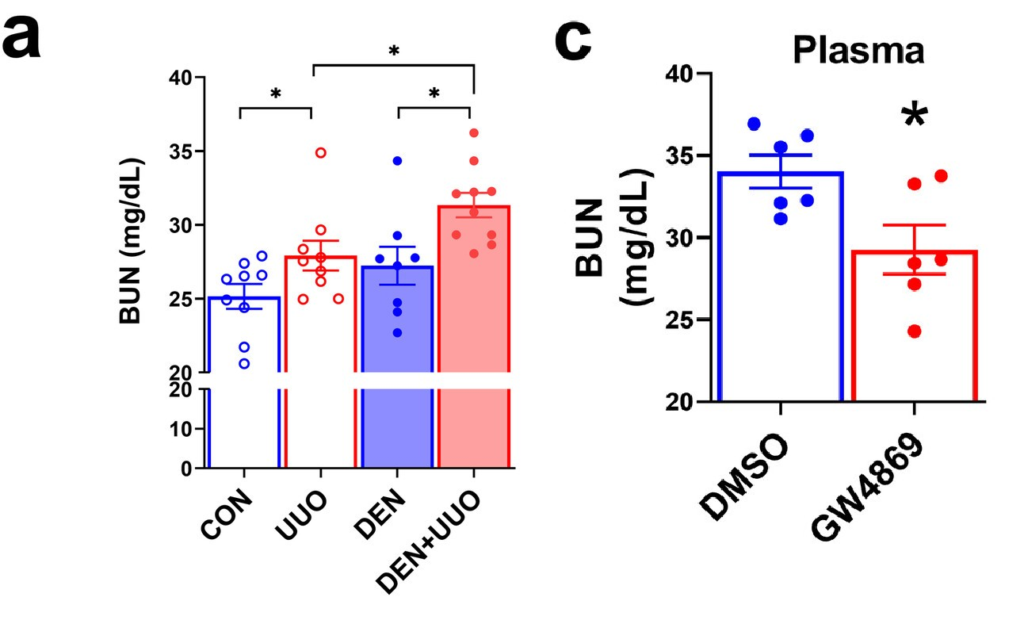
Figure 1. Combined data from Figures 2a and 4c demonstrate elevated plasma BUN levels in mouse models of kidney injury. Further increases followed muscle denervation and attenuation after inhibition of extracellular vesicle release. BUN was measured using a colorimetric ELISA. CON (Control), UUO (Unilateral Ureteral Obstruction only), DEN (Muscle denervation only), and DEN+UUO (UUO surgery performed after muscle denervation). GW4869 is an inhibitor of EV biogenesis and release. Figure adapted from Jiang et al 2025.
BUN is Consistent Across Disease Contexts
The utility of BUN measurement extends beyond classical kidney injury models, serving as a stable functional readout across diverse disease contexts. In a Journal of Nutritional Biochemistry study examining lactoferrin supplementation in a mouse model of adenine-induced chronic kidney disease, BUN was used to assess renal dysfunction alongside fibrosis, inflammation, and systemic metabolic disruption. Lactoferrin treatment significantly reduced BUN levels, in parallel with improved renal histology and decreased expression of pro-fibrotic markers.
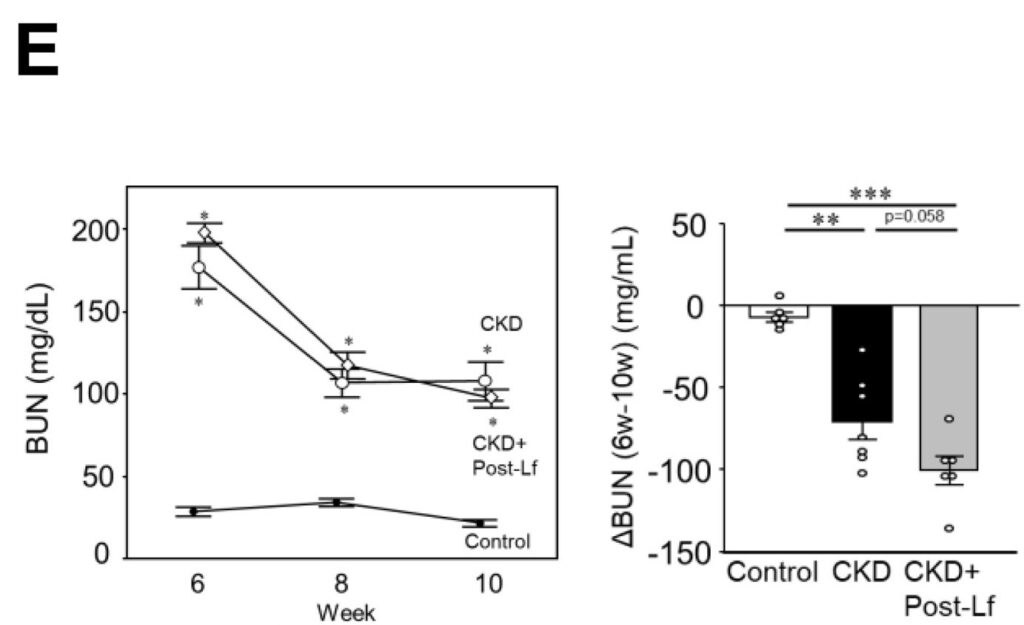
Figure 2. Lactoferrin supplementation improves kidney function as assessed by BUN. Excerpted Figure 6e shows reduced BUN levels in a mouse model of chronic kidney disease following lactoferrin treatment. Decreases in BUN parallel histological and molecular improvements in renal tissue. Figure adapted from Iwamoto et al 2025.
BUN also appears prominently in studies where kidney dysfunction emerges as a secondary—but clinically relevant—outcome. In a recent Molecular and Cellular Biochemistry study of thioacetamide-induced renal fibrosis, researchers used serum BUN to quantify functional impairment driven by oxidative stress and inflammation. Interventions that reduced fibrotic burden and inflammatory signaling produced corresponding decreases in BUN. The findings reinforced BUN’s role as a sensitive marker of renal injury even in toxin- and metabolism-driven disease models.
Across these distinct experimental settings, BUN provides a consistent, quantitative benchmark that allows researchers to compare disease severity and intervention efficacy.
A Practical Tool for High-Throughput, Pre-Clinical Studies
BUN is a well-established biomarker; however, its continued utility depends on reliable and accessible measurement methods. The Arbor Assays DetectX® Urea Nitrogen (BUN) Detection Kit is designed to support pre-clinical workflows by combining sensitivity with simplicity:
- Sample types: Serum, plasma, urine, saliva
- Sensitivity: 30 µg/dL
- Species: Species-independent
- Assay time: 30 minutes
- Throughput: 40 samples in duplicate per plate
- Readout: Colorimetric, 450 nm
The assay is well-suited to longitudinal animal studies, multi-arm experimental designs, and workflows in which kidney function must be assessed alongside multiple molecular endpoints. The short assay time and broad sample compatibility allow integration of BUN measurement without adding unnecessary complexity.
Bringing Functional Clarity to Pre-Clinical Kidney Research
As kidney research increasingly addresses complex, multi-organ disease biology, BUN remains a consistent functional anchor linking molecular and histopathological findings to whole-organ outcomes. With sensitive, easy-to-use assay kits, researchers can confidently assess disease severity, progression, and therapeutic impact.
To explore additional peer-reviewed studies using Arbor Assays’ BUN Detection Kit—or to learn how researchers are integrating BUN measurement into their own kidney disease workflows—visit the Arbor Assays publication database or contact our team for more information.
Featured Products
-
 In Stock
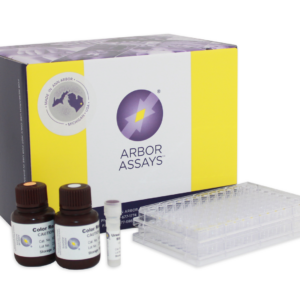
Urea Nitrogen (BUN) Colorimetric Detection Kit
Price range: $436.00 through $1,745.00The DetectX® Urea Nitrogen (BUN) Detection Kits quantitatively measure urea nitrogen in 30 minutes.
Related Products
-
 In Stock
Arg8-Vasopressin (AVP) ELISA Kit
Price range: $573.00 through $2,291.00The DetectX® Arg8-Vasopressin (AVP) Immunoassay Kit (ELISA) is designed to quantitatively measure AVP present in serum, plasma and tissue culture media samples.