Perceived threat, Physical Reaction: How Fear Moves from Brain to Body
When Fear Changes the Body
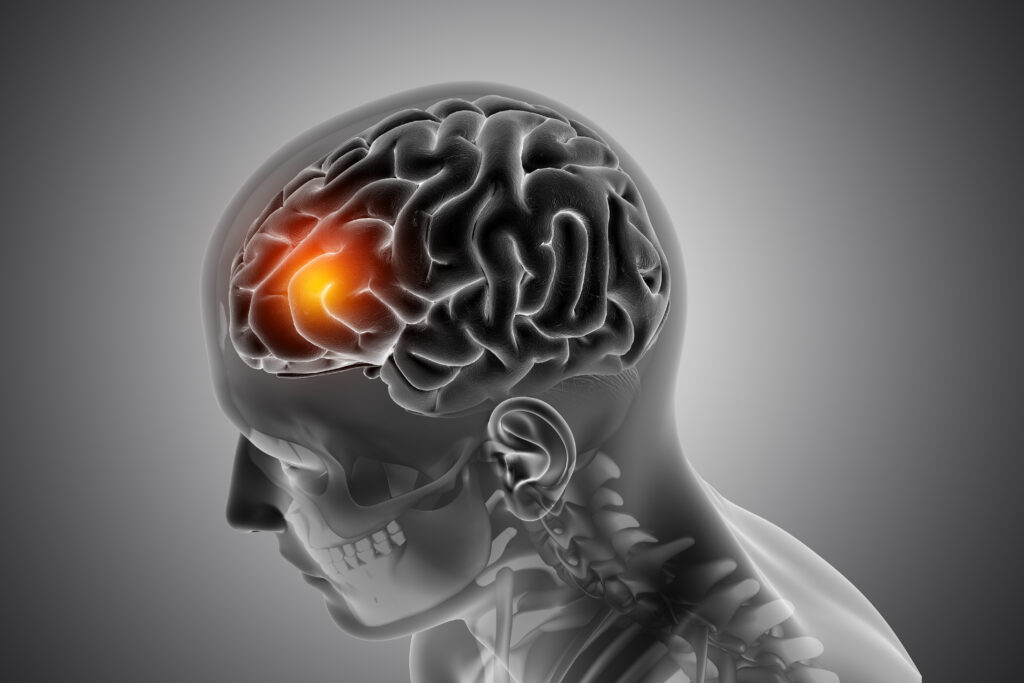
Stressful situations perceived by the brain cause the release of hormones, which translate perceived stress to a physical reaction. This response is intended to keep us safe from danger. In humans, cortisol is critical for regulating this reaction (corticosterone is the mouse equivalent). Extremely traumatic episodes can even cause posttraumatic stress disorder (PTSD).
Research on PTSD aims to understand how this condition affects mental and physical health. One group of researchers at the Korea Brain Research Institute has investigated PTSD and its relationship to physical behavior. In one specific study, the group wanted to understand how traumatic situations change social behavior across developmental stages (adolescence, early adulthood, and adulthood), using mice.
The group used single-prolonged-stress (SPS) in mice as a model of human PTSD. SPS is commonly used to understand human PTSD. Importantly, mice with SPS show increased levels of corticosterone levels, while humans with PTSD show increased levels of cortisol.
Stress Looks Different Across Age Groups
The group wanted to know if exposing mice in different developmental stages to stressful situations would change how they respond to behavioral tests. Mice were stressed with foot-shock or forced swimming tests and then isolated from other mice. The weights of the mice were taken both before and after exposure to stress. They found that mice at all developmental stages with SPS had lost weight.
Then, the researchers used a tube dominance test to understand how SPS impacts social dominance behavior. They found that adolescent mice with SPS demonstrated more dominant behavior over adult mice, suggesting that chronic stress increases social dominance behavior in adolescents.
To further quantify the differences in social behavior across age groups, the researchers measured corticosterone levels with the Corticosterone Multi-Format ELISA kit from Arbor Assays.
They found that corticosterone levels were significantly higher in mice with SPS compared to mice without SPS. Interestingly, corticosterone decreased after social isolation in both adolescent and adult mice. If mice were exposed to foot-shock and forced swimming tests, corticosterone levels would be elevated. Social isolation, however, caused these levels to decrease. The group concluded that stress type varied corticosterone levels across age groups.
The Brain Responded Differently at Different Ages
To further understand why adolescent and adult mice with SPS showed different behavioral responses, the group measured changes in gene expression.
They found an increase in expression of the Fabp7 gene in adolescent mice with SPS. This gene encodes a fatty-acid binding protein that has been linked to nervous system development. Additionally, they observed a decrease in the expression Cxcl12 gene in the same mice, which has a critical role in neuron development and differentiation. In adult mice these patterns were reversed, indicating that the SPS experienced during adolescence alters brain development differently than in adult mice.
Based on their results, the group concluded that traumatic stress experienced at various developmental stages differentiates long-term social behavior. Importantly, genetic and hormonal changes lead to various physiological outcomes in the brain, impacting physical behavior. Understanding these differences could help in identifying treatment for individuals with PTSD and other forms of trauma.
______________
By: Kaitrin Freeland
Edited by: Charukesi Sivakumar, Courtney Myers
Featured Products
-
 In Stock
Corticosterone Multi-Format ELISA Kit
Price range: $375.00 through $1,499.00The DetectX® Corticosterone Multi-Format ELISA Kits quantitatively measures corticosterone present in a variety of samples. -
 In Stock
Cortisol ELISA Kit
Price range: $346.00 through $1,388.00The DetectX® Cortisol ELISA Kits quantitatively measure cortisol present in a variety of samples.