
ICI-Associated Nephritis: Creatinine Biomarkers in Cancer Immunotherapy
Immune checkpoint inhibitors (ICIs) have transformed cancer treatment by enabling the immune system to recognize and attack tumors more effectively. However, these therapies can also trigger immune-related adverse events (irAEs), in which activated immune cells attack healthy tissues.
Among the most serious irAEs is immune checkpoint inhibitor-associated acute interstitial nephritis (ICI-AIN), which can progress to acute kidney injury and interrupt treatment. As ICIs expand across oncology indications, understanding and mitigating renal toxicity remain important areas of translational research.
A recent study published in JCI Insight used a humanized PD-1/PD-L1 mouse model to investigate the mechanisms driving ICI-associated nephritis and evaluate potential strategies to reduce kidney injury. Researchers monitored renal function using the Arbor Assays DetectX® Serum Creatinine Kit (KB02-H) and DetectX® Urinary Creatinine Detection Kit (K002-H), alongside blood urea nitrogen (BUN) measurements and detailed immune profiling.
Building a Humanized Model of ICI-Associated Nephritis
To better replicate human responses to checkpoint inhibition, investigators used humanized PD-1/PD-L1 mice and treated them with anti-PD-1 and anti-CTLA-4 therapies. Additional stimulation with TNF-α and IFN-γ was used to model a heightened inflammatory environment.
Mice received checkpoint inhibitors alone, checkpoint inhibitors plus inflammatory cytokines, or checkpoint inhibitors combined with TNF-α blockade. Researchers assessed kidney function, immune-cell infiltration, cytokine signaling, and renal histopathology throughout the study.
Creatinine and BUN Reveal Early Kidney Dysfunction
One of the key findings was that mice receiving ICI therapy developed measurable signs of renal dysfunction before severe tissue damage became apparent.
The humanized model successfully reproduced key features of ICI-associated nephritis observed in patients:
- 67% of mice receiving ICIs alone developed nephritis
- 100% of mice receiving ICIs plus TNF-α and IFN-γ stimulation developed nephritis
- Mean inflammation scores increased from 1.0 (mild nephritis) in the ICI-only group to 2.1 (mild-to-moderate nephritis) in the cytokine-stimulated group
- Mice that developed nephritis exhibited significantly higher BUN levels than animals without nephritis
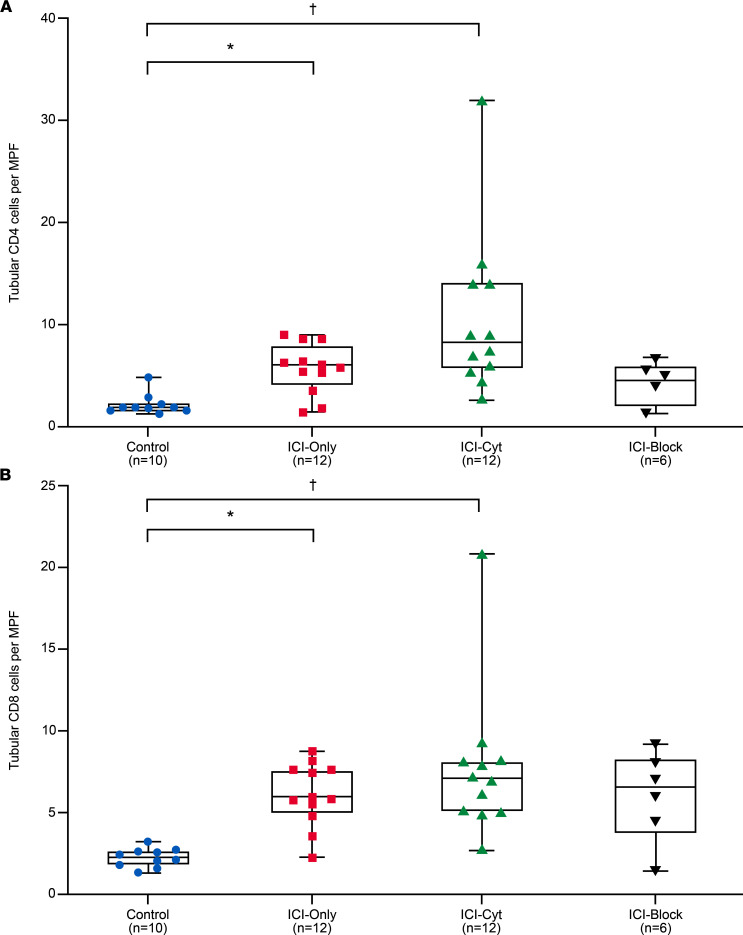
Researchers also observed elevated plasma creatinine levels and increased infiltration of CD4+ and CD8+ T cells within kidney tissue, mirroring findings reported in patients with ICI-associated nephritis.
Investigators monitored plasma creatinine, urinary creatinine, urine protein-to-creatinine ratio, and BUN to assess renal function throughout the study. Together, creatinine and BUN provided functional biomarkers of kidney injury, complementing histological analyses of immune-mediated damage.
Evaluating a Potential Strategy to Reduce Nephritis
The study also explored whether blocking TNF-α could reduce kidney toxicity during checkpoint inhibitor treatment.
Compared with mice receiving ICIs alone or ICIs plus inflammatory cytokines, animals treated with TNF-α blockade showed multiple signs of reduced kidney injury and inflammation:
- Significantly lower BUN levels compared with both ICI-treated groups
- Reduced renal CD4+ and CD8+ T-cell infiltration, approaching levels observed in untreated controls
- Reduced TNF-α expression within kidney tissue
- Plasma TNF-α concentrations decreased from approximately 913–1,251 pg/mL in ICI-treated mice to just 12 pg/mL following TNF-α blockade
- MCP-1 concentrations fell from approximately 1,900–2,200 pg/mL to 107 pg/mL
- Reduced IFN-γ signaling within kidney tissue
Together, these findings suggest that TNF-α plays a central role in the inflammatory cascade driving ICI-associated nephritis. While additional studies are needed to determine how these findings translate clinically, the work demonstrates how humanized mouse models can be used to evaluate both toxicity mechanisms and potential mitigation strategies during immunotherapy development.
Supporting Kidney Toxicity Research
As immuno-oncology programs continue to advance, robust biomarkers remain essential for monitoring treatment-associated toxicities. This study demonstrates how creatinine and BUN measurements can detect early signs of kidney dysfunction while helping researchers evaluate strategies to mitigate immune-related nephritis.
Arbor Assays DetectX® Serum Creatinine Kit and DetectX® Urinary Creatinine Detection Kit enabled quantitative assessment of kidney function during the development of immune-related nephritis, helping researchers link immune activation to functional renal outcomes.
Want to learn more? Discover additional published studies using Arbor Assays kits.
Featured Products
-
 In Stock
Serum Creatinine Detection Kit
Price range: $321.00 through $514.00The DetectX® Serum Creatinine Kits measure creatinine in serum and plasma samples.
-
 In Stock
Urea Nitrogen (BUN) Colorimetric Detection Kit
Price range: $436.00 through $1,745.00The DetectX® Urea Nitrogen (BUN) Detection Kits quantitatively measure urea nitrogen in 30 minutes.
Related Products
-
 In Stock
Urinary Creatinine Detection Kit
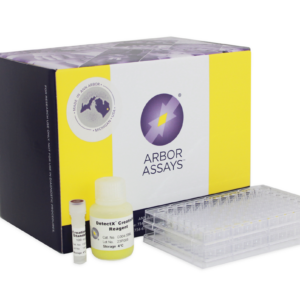
Price range: $314.00 through $1,254.00The DetectX® Urinary Creatinine Detection kits are designed to quantitatively measure creatinine in urine samples. A NIST calibrated creatinine standard is used to standardize the assay.