

Study Inflammation in Adverse Drug Reactions with a Multi-Biomarker Strategy
Adverse drug reactions (ADRs) are an all-too-common complication of modern medicine. According to a 2024 cross-sectional study published in Scientific Reports, ADRs cause an estimated 5% of emergency hospital admissions each year. Whether due to hypersensitivity, immune dysfunction, or cumulative toxicity, ADRs represent a serious challenge in clinical research settings. As new biologics, combination therapies, and small-molecule drugs continue to enter the market, understanding and preventing adverse responses is more important than ever.
Researchers are turning to biomarkers to predict, diagnose, and treat ADRs. These measurable indicators reveal how the body responds to a drug at the molecular level. Biomarkers of inflammation, immune activation, and oxidative stress are particularly powerful tools for tracking the biological impact of drug exposure. Inflammation markers not only improve our understanding of ADR mechanisms during pre-clinical research but also help identify at-risk populations, guide dosing decisions, and monitor recovery.
The Biology Behind ADRs
Drugs often act as triggers for immune responses, either by directly damaging cells or by mimicking antigens that activate immune surveillance pathways. This immune modulation can lead to the unintentional release of inflammatory mediators, oxidative enzymes, and cellular debris, potentially resulting in tissue damage. In severe cases, the inflammation can become systemic, affecting multiple organs and requiring hospitalization.
Some of the most critical biological processes involved in ADRs are:
- Tissue inflammation and remodeling, which is often marked by increased expression of proteins like osteopontin (OPN) and C-reactive protein (CRP).
- Oxidative stress, driven by neutrophil activity and myeloperoxidase (MPO) release, plays a role in drug-induced liver injury and vascular toxicity.
- Immune dysregulation, where the body’s own defenses misfire, leading to uncontrolled inflammation.
By profiling biomarkers that reflect these biological pathways, researchers can map the cascade of events that leads from drug exposure to clinical symptoms.
Biomarkers in ADR Research
The biological complexity of adverse drug reactions demands a multifaceted research approach. Single-metric readouts can fall short when it comes to understanding the diverse ways drugs can affect different systems. That’s why profiling multiple biomarkers of inflammation, oxidative stress, and tissue remodeling is so valuable for ADR studies. A few key proteins involved in ADRs include:
- Osteopontin (OPN): A multifunctional protein involved in immune cell recruitment and tissue remodeling, OPN is elevated in inflammatory diseases and has been shown to rise in response to drug-induced tissue damage.
- C-Reactive Protein (CRP): One of the most widely used clinical indicators of systemic inflammation, CRP reflects acute-phase immune activation and is often elevated in patients experiencing severe ADRs.
- Myeloperoxidase (MPO): An enzyme produced by neutrophils and monocytes, MPO contributes to oxidative damage and is increasingly recognized for its role in drug metabolism and toxicity, especially in reactions involving vascular or hepatic injury.
These biomarkers serve as indicators of the body’s inflammatory response, making them ideal targets for preclinical evaluation of safety and mechanism of action. Arbor Assays offers validated, high-performance ELISA kits to quantify these analytes in serum, tissue culture media, urine, and other biological fluids.
Arbor Assays Kits for ADR Studies
Osteopontin (OPN)
Osteopontin is a secreted glycoprotein that modulates immune responses, wound healing, and tissue fibrosis. Stress, inflammation, or tissue injury conditions strongly induce OPN expression—making it a valuable biomarker for tracking the immune consequences of adverse drug reactions.
In the literature: A 2022 study published in The Journal of Dermatology used Arbor Assays’ DetectX® OPN ELISA Kit to explore serum OPN levels in patients experiencing severe cutaneous ADRs. These included Stevens-Johnson Syndrome (SJS), Toxic Epidermal Necrolysis (TEN), and Drug Reaction with Eosinophilia and Systemic Symptoms (DRESS).
The researchers found significantly elevated OPN concentrations in individuals affected by these conditions compared to healthy controls. OPN levels correlated with disease severity and inflammatory cytokine signatures, suggesting it may serve as both a diagnostic marker and an indicator of prognosis.
With the OPN ELISA Kit (K021-H), the researchers were able to:
- Quantify OPN levels in patient serum with high sensitivity and reproducibility
- Identify strong correlations between OPN expression and clinical severity
- Highlight OPN as a non-invasive marker of immune activation in cutaneous drug reactions
This kit is ideal for preclinical and translational studies evaluating tissue inflammation and drug-induced immune responses.
C-Reactive Protein (CRP)
CRP is a classic acute-phase protein that increases rapidly in response to inflammatory cytokines, such as IL-6. Clinicians routinely use CRP to track systemic inflammation. CRP has been shown to rise in numerous types of ADRs, including those involving biologics, chemotherapeutics, and antibiotics.
A 2024 study published in De Gruyter Open Medicine evaluated risk factors for severe ADRs in hospitalized patients. Elevated CRP was consistently linked to higher risk profiles, particularly in individuals with comorbid inflammatory conditions. The findings emphasized the importance of early CRP screening in clinical trials and hospital monitoring protocols.
For scientists looking to accurately measure CRP, Arbor Assays’ DetectX® CRP ELISA Kit (K069-H) provides:
- High-sensitivity detection down to 0.616 ng/mL
- Validated use with human serum and plasma
- A streamlined protocol that supports efficient sample processing in clinical research
CRP provides a valuable early readout of systemic inflammation, enabling faster decision-making and better understanding of individual patient or model responses.
Myeloperoxidase (MPO)
Myeloperoxidase is a heme-containing enzyme released by activated neutrophils and monocytes during inflammatory responses. It plays a key role in generating reactive oxygen species and promoting oxidative tissue damage. During adverse drug reactions, elevated MPO activity is associated with drug-induced vascular inflammation, hepatotoxicity, and metabolic activation of prodrugs into reactive intermediates.
For example, a 2024 study published in Chemico-Biological Interactions compared the oxidative activity of neutrophil-derived MPO with that of hepatic cytochrome P450 enzymes in the context of drug metabolism. The study demonstrated that MPO, like P450s, is capable of bioactivating certain compounds, indicating that MPO-driven oxidative mechanisms contribute to drug toxicity, independent of liver metabolism.
These findings expand our understanding of how inflammation and neutrophil activation influence adverse drug outcomes.
Arbor Assays’ DetectX® MPO ELISA Kit (K060-H) offers:
- High specificity for human MPO in serum, plasma, saliva, urine, and tissue culture media
- Quantitative indication of neutrophil activation and oxidative potential
- Compatibility with inflammation-focused ADR models where MPO is a mechanistic driver
When used in conjunction with markers such as CRP and OPN, MPO can provide a critical oxidative dimension to ADR biomarker profiling.
Why Choose Arbor Assays for ADR Research
Studying adverse drug reactions requires more than tracking a single inflammatory signal; it demands a systems-level understanding of how the immune system, oxidative stress pathways, and tissue integrity respond to drug exposure. Arbor Assays supports researchers with validated ELISA kits that enable parallel quantification of multiple biomarkers, providing a comprehensive view of drug-induced pathology.
Whether you’re studying systemic inflammation with CRP, tissue remodeling with OPN, or neutrophil-driven oxidative stress with MPO, Arbor’s kits provide:
- High sensitivity and specificity across human and preclinical samples
- Streamlined protocols to support efficient, reproducible processing
- Flexible use across sample types, including blood, urine, saliva, and tissue culture supernatants
By combining these kits, researchers can monitor early inflammation, tissue-specific effects, and oxidative stress in tandem—leading to more informed decisions during preclinical development.
Explore our full catalog of kits or contact us today to learn more about how Arbor Assays can support your ADR research.
Featured Products
-
 In Stock
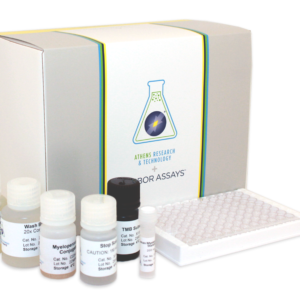
Myeloperoxidase (MPO) Human ELISA Kit
$641.00The DetectX® Myeloperoxidase (MPO) Human ELISA Kit is designed to quantitatively measure MPO present in a variety of matrices.