How Innovation Has Transformed Conservation Efforts Twenty Years After Steve Irwin
“We don’t own the planet Earth, we belong to it. And we must share it with our wildlife.”
Steve Irwin had a remarkable ability to cultivate curiosity about the natural world. Through his wildlife documentaries, he inspired generations of nature enthusiasts and scientists to appreciate the incredible diversity of life on Earth. This September marks twenty years since his passing, but his legacy continues to influence research aimed at understanding animal populations, evaluating ecosystem health and informing conservation efforts.
Field observations remain a foundation of conservation research, but within the past two decades, there have also been remarkable advances in analytical science. These innovations have considerably expanded the tools available for ecologists opening new avenues to investigate wildlife health and physiology.
Expansion of Non-Invasive Sampling
Minimizing animal disturbance is a fundamental consideration in ethical wildlife research.
Laboratory studies of model organisms are an important testing ground to evaluate new sampling strategies against established methods. Findings from these controlled studies can then inform how similar approaches can be adapted and validated to study animals in the wild.
A recent study evaluated cortisol measurements in zebrafish trunk tissue and skin mucus using Arbor Assays’ DetectX® Cortisol ELISA Kit. While trunk tissue, collected at the cross-section of the body, remains a well-established matrix for endocrine studies, it must be collected post-mortem and therefore limits follow-up measurements from the same individual.
Repeated measurements can provide a clearer understanding of how a fish’s physiological stress response changes over time, particularly as animals experience common stressors while residing in research facilities including handling and changes in housing density. In this study, skin mucus was collected by gently swabbing the body surface of the fish. Following acute stress, cortisol concentrations increased in both skin mucus and the traditionally used trunk tissue, showing a similar endocrine response across the two sample tissues.
Continued evaluation of noninvasive approaches can expand the sampling options for endocrine research while reducing reliance on terminal sampling.
Findings from such controlled studies can establish a framework for validating biological samples before comparable approaches are adapted for wildlife species, where opportunities to collect samples may be considerably more limited.
Building Retrospective Longitudinal Profiles
On another hand, important advances have also come from studying preserved tissues collected after an animal has passed. Although these samples are not obtained non-invasively, certain archived specimens can preserve physiological information from the period in which the tissue formed.
In a traditional longitudinal study, the same individual is sampled repeatedly over time. Retrospective longitudinal profiling instead reconstructs changes over time from tissues that grew continuously during the animal’s life, with different sections corresponding to different periods in the animal’s life.
Long-term endocrine analyses have become particularly valuable for studying large marine mammals, including baleen whales. Baleen is the keratin-based feeding structure that whales use to filter prey from seawater. Since it grows continuously, hormones become incorporated into successive sections as the tissue forms.
In a recently published study of the critically endangered Rice’s whale, researchers used Arbor Assays’ Progesterone ELISA Kit, Cortisol ELISA Kit, and Corticosterone ELISA Kit, to analyze continuing sections from the baleen plates of seven whales.
The resulting profiles identified a recent pregnancy in one female and elevated glucocorticoid concentrations near the end of life in two whales believed to have experienced prolonged nutritional stress. It was also found that the three adult whales examined did not experience a clear annual testosterone cycle, providing preliminary evidence that this subtropical species may actually reproduce throughout the year.
Retrospective longitudinal profiling can also be expanded from one whale’s life history to patterns across a whole population. In a 2026 publication, researchers gathered bowhead whale baleen measurements to construct a record spanning 1985 to 2010.
Corticosterone was measured to assess adrenal stress activity, while triiodothyronine (T3), a thyroid hormone that regulates metabolic rate and energy expenditure, provided more information about the animal’s physiological condition. These two biomarkers were quantified using Arbor Assays’ Corticosterone Multi-Format ELISA Kit and Triiodothyronine (T3) ELISA Kit.
Neither hormone measurement showed indications of prolonged physiological or nutritional stress through 2010, providing a reference for evaluating future responses as Arctic conditions continue to change.
Multi-omic Analyses for a more Comprehensive Understanding
Recent studies are beginning to connect established endocrine measurements with newer molecular approaches. A 2026 study of free-living Northern cardinals measured plasma corticosterone using Arbor Assays’ Corticosterone Multi-Format ELISA Kit while sequencing microbial DNA from cloacal swabs and recording body condition and beak coloration.
Cardinals with larger corticosterone spikes after being handled experienced significant decreases in microbial diversity. Birds that are temporarily held before release also showed greater changes in their cloacal microbial communities approximately 11 days later. These results illustrate how endocrine assays can be incorporated into broader molecular studies to map relationships between microbial communities and animal stress physiology.
Future Directions in Conservation Physiology
Steve Irwin inspired generations to look more closely at wildlife. Twenty years later, continued innovation is giving conservation researchers more detailed ways to study animals across physiological systems, life histories, and changing ecosystems.
As research continues to deepen our understanding of our planet and the wildlife that inhabits it, Irwin said it best: “Crikey! What a beauty!”
_______________________
By: Camila Gonzalez Curbelo
Edited by: Charukesi Sivakumar
Featured Products
-
 In Stock
Cortisol ELISA Kit
Price range: $346.00 through $1,388.00The DetectX® Cortisol ELISA Kits quantitatively measure cortisol present in a variety of samples. -
 In Stock
Progesterone ELISA Kit
Price range: $346.00 through $1,388.00The DetectX® Progesterone ELISA Kits quantitatively measure Progesterone present in extracted dried fecal samples, urine and tissue culture media samples. Used in determination of Reproduction and Sex Steroid Metabolism
-
 In Stock
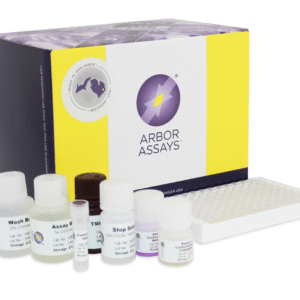
Corticosterone Multi-Format ELISA Kit
Price range: $375.00 through $1,499.00The DetectX® Corticosterone Multi-Format ELISA Kits quantitatively measures corticosterone present in a variety of samples. -
 In Stock
Triiodothyronine (T3) ELISA Kit
Price range: $505.00 through $2,017.00Quantitatively measures T3 present in urine, extracted serum, plasma, fecal extracts, and tissue culture media samples. It measures total T3 in extracted serum, plasma and fecal extracts.