

Mitochondria: Beyond the Powerhouse of the Cell
You might recall the endosymbiotic theory, where our unicellular ancestors abducted proto-mitochondria and have since co-evolved to become inseparable.
Fast-forward to the present: your cells get to feed on carbs and fats, and in turn, mitochondria convert them into energy through a carefully choreographed dance of arrows and acronyms and biochemical cycles. It’s a mutualistic relationship… mostly. However, the moniker ‘powerhouse’ becomes a bittersweet idiomatic accident the more we understand mitochondria in the context of disease.
Beyond their role in energy production, mitochondria can shape disease by influencing oxidative stress, maintaining cellular health in the aging brain, and triggering inflammatory responses.
Chronic Mild Stress impacts Antioxidant Systems and Mitochondrial Function in the Brain
Mitochondrial respiration sustains the energy demands of metabolically active tissues within the heart and the brain. Like factories, unregulated energy production can release toxic factors, such as reactive oxygen species (ROS, for short). Under healthy conditions, antioxidant enzymes (such as catalase, superoxide dismutase, and glutathione systems) keep ROS in check. Under stressed conditions, however, excess ROS can overwhelm these defenses and amplify disease states by interfering with DNA integrity, as well as protein and lipid structure and function.
A study published in the Journal of Translational Medicine by Ulecia-Morón et. al found that chronic mild stress impaired catalase activity, perturbed mitochondrial quality control, and promoted an overactive neuroimmune response. The researchers utilized DNA damage and Catalase kits from Arbor Assays and found an intriguing connection between cognitive and oxidative stress in neurons and mitochondria, beyond that of a bacterial roommate that pays rent in ATP.
Biogenesis Creates New Mitochondria in the Aging Brain
Mitochondria are dynamic organelles that are constantly recycling and regenerating their components through mitophagy and biogenesis, respectively. The balance between these processes is particularly important in neurons, where continual action potential firing keeps energy demands high, and their post-mitotic nature leaves little margin for error. Neurodegenerative diseases are often marked by an imbalance of these mitochondrial maintenance mechanisms.
The secondary messenger cyclic adenosine monophosphate (cAMP) modulates both mitochondrial biogenesis and mitophagy via signaling pathways like the cAMP-response element-binding protein (CREB). Adenylyl cyclases convert ATP into cAMP, while phosphodiesterases (PDEs) break down cAMP, allowing cells to regulate its signaling potency. However, changes in PDE activity tip the balance of cAMP, potentially contributing to metabolic dysfunction associated with Alzheimer’s disease (AD).
To test the potential therapeutic impact of cAMP modulation, Bartolome et. al. leveraged both an in vivo and in vitro model of AD exposed to S14, a PDE7 inhibitor. Using the Arbor Assays cAMP ELISA kit, the researchers observed that S14 increased cAMP levels. S14 also restored mitochondrial mass, and brought markers of mitochondrial dynamics, quality control, and biogenesis proteins closer to baseline levels. Restoration of mitochondrial function extended to a neuroprotective effect on learning and memory; S14 administration reversed memory impairments, and increased neurogenesis in AD mice.
The Tension of Bacterial Origin
Mitochondria share a few properties with their bacterial ancestors, including a double membrane, and, more alarmingly for our immune system, circular DNA. Our cells have also evolved to be particularly sensitive to foreign DNA inside the cytoplasm. Mitochondria, our considerate cellular roommate, typically contain their suspiciously bacteria-like mitochondrial DNA (mtDNA) to avoid triggering the cell’s innate immune response.
Despite longstanding endosymbiosis with mitochondria, our cells and organelles are still capable of miscommunication. Under stressful conditions, mtDNA can leak from mitochondria to activate cyclic GMP–AMP synthase (cGAS), in turn synthesizing the second messenger 2′,3′-cGAMP, which activates the stimulator of interferon genes (STING). Although the cGAS/STING pathway helps protect against pathogens, it can also exacerbate inflammation in disease-contexts involving mitochondrial dysfunction. The 2′,3′-Cyclic GAMP ELISA Kit can help researchers quantify cGAMP as a readout of cGAS-STING pathway activation and investigate the link between mitochondrial stress and inflammation.
Mitochondria are Critical Mediators of Metabolism, Inflammation, and Cell Survival
Despite ages of co-evolution with the infamous ‘Powerhouse of the Cell’, it is only recently that we’ve begun to understand the depth of our relationship to mitochondria. Mitochondria play a critical role in maintaining a healthy brain that invites innovative ways to regulate and monitor mitochondrial function and dysfunction. Be it the inflammatory response generated by the release of their mtDNA, a remnant of their bacterial origin, or excessive ROS production, Arbor Assays has many kits that can aid researchers in extending our understanding of these hardworking organelles.
________________________________
Author: Francisco J Torres Torres
Editors: Deanna Cannizzaro, Charukesi Sivakumar
Featured Products
-
 In Stock
DNA Damage ELISA Kit
Price range: $689.00 through $2,753.00The DetectX® DNA Damage ELISA Kits quantitatively measure DNA and RNA oxidized guanosine species.
-
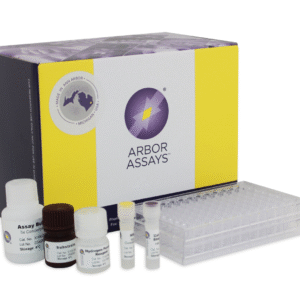 In Stock
Catalase Colorimetric Activity Kit
$451.00The DetectX® Catalase Colorimetric Activity Kit quantitatively measures catalase activity in any sample and includes everything needed to measure catalase activity in 45 minutes.
-
In Stock
Cyclic GMP Direct ELISA Kit – Improved Sensitivity
Price range: $472.00 through $1,883.00The DetectX® cGMP Immunoassay Kits - Improved Sensitivity is designed to measure cGMP directly and conveniently lyse, stabilize and measure in one step.
-
 In Stock
2′,3′-Cyclic GAMP ELISA Kit
Price range: $662.00 through $2,646.00The DetectX® 2',3'-cGAMP ELISA Kits measure 2',3'-cGAMP in tissues and cells.